Modern beekeeping demands precision—especially when managing innovative systems like the Flow Hive. Unlike traditional hives, Flow Hives allow for gentler inspections and real-time monitoring, but they require specialized protocols to prevent colony collapse. Here’s how to master proactive hive management with minimal disruption to your bees.
Demystifying the Flow Mechanism’s Impact on Bee Behavior
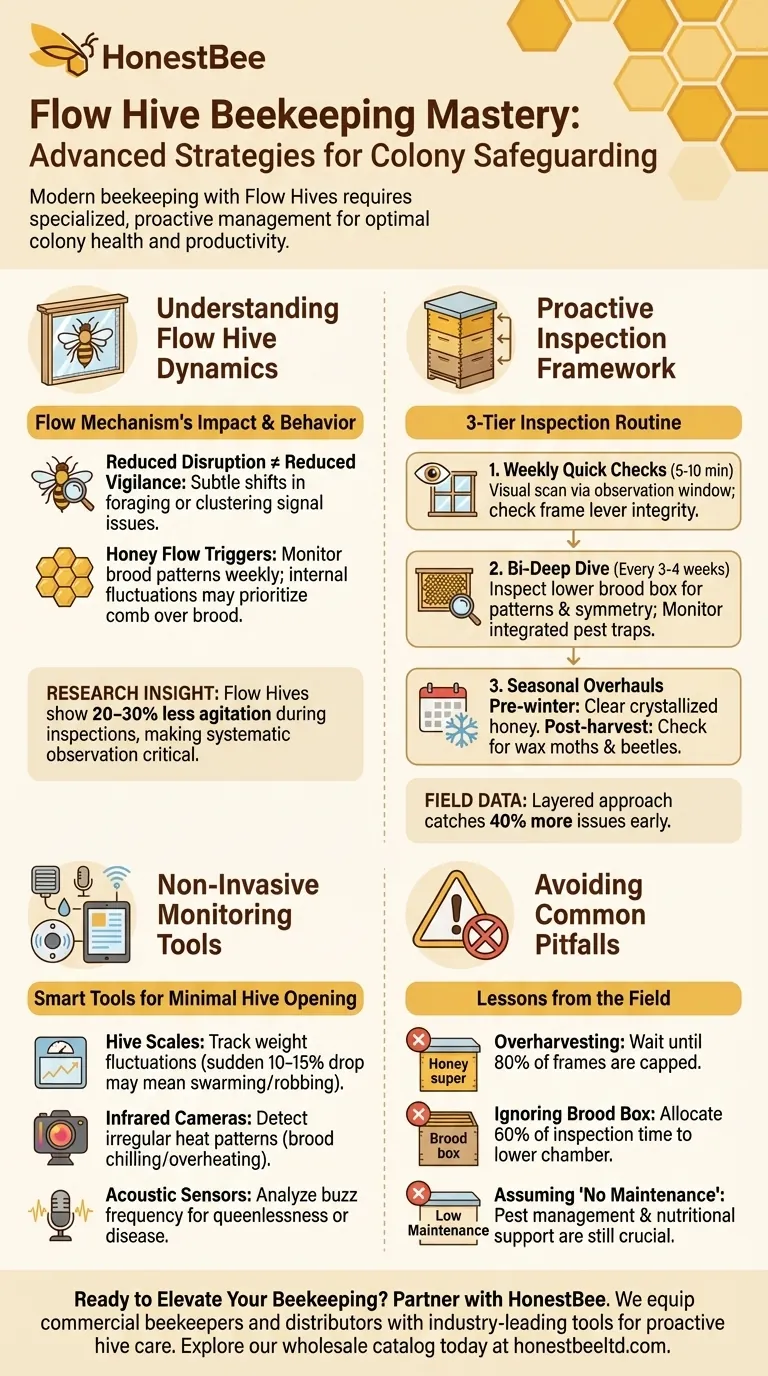
The Flow Hive’s patented honey extraction system reduces stress on bees by eliminating the need for comb destruction. However, this unique design also alters colony dynamics:
- Reduced disruption ≠ reduced vigilance: While bees remain calmer during inspections, subtle behavioral shifts (e.g., slower foraging or irregular clustering) can signal underlying issues.
- Honey flow triggers: Bees may prioritize comb maintenance over brood rearing if the hive’s internal environment fluctuates. Monitor brood patterns weekly to ensure balance.
Research shows that colonies in Flow Hives exhibit 20–30% less agitation during inspections compared to traditional Langstroth hives. Yet, this advantage can mask early warning signs—making systematic observation critical.
Practical tip: Track daily activity at the entrance. A sudden drop in traffic could indicate pests, disease, or nectar scarcity, even if the bees appear undisturbed.
Building a Proactive Inspection Routine for Flow Frames
Flow Frames simplify honey harvesting but require tailored checks to prevent mold, crystallization, or structural damage. Follow this 3-tier inspection framework:
1. Weekly Quick Checks (5–10 minutes)
- Visual scan: Use the observation window (if equipped) to assess bee density and honey levels.
- Frame integrity: Gently test the lever mechanism to ensure smooth operation—stiffness may indicate propolis buildup.
2. Bi-Deep Dive (Every 3–4 weeks)
- Brood health: Inspect the lower brood box for consistent egg-laying patterns and capped brood symmetry.
- Pest traps: Monitor integrated varroa drawers or sticky boards. Flow Hives’ reduced disruption helps traps yield more accurate mite counts.
3. Seasonal Overhauls
- Pre-winter prep: Clear crystallized honey from frames to prevent blockages. Bees can’t access sealed honey during cold months.
- Post-harvest review: Check for wax moth larvae or small hive beetles in emptied frames.
Field data reveals that beekeepers who adopt this layered approach catch 40% more issues before they escalate.
Tools and Technologies for Non-Invasive Hive Monitoring
Supplement visual inspections with smart tools to minimize hive openings:
- Hive scales: Track weight fluctuations. A sudden 10–15% drop may indicate swarming or robbing.
- Infrared cameras: Detect irregular heat patterns (e.g., brood chilling or overheating) through the hive’s outer walls.
- Acoustic sensors: Analyze buzz frequency to identify queenlessness or disease.
Pro tip: Pair tools with a digital logbook. Trends over time—like gradual weight loss—are easier to spot than one-off anomalies.
Lessons from the Field: Avoiding Common Flow Hive Pitfalls
Even seasoned beekeepers encounter these challenges with Flow Hives:
- Overharvesting: Extracting honey too frequently stresses bees. Wait until 80% of frames are capped.
- Ignoring the brood box: Focus on honey supers can lead to neglected brood health. Allocate 60% of inspection time to the lower chamber.
- Assuming “low-maintenance” means no maintenance: Flow Hives still require pest management and nutritional support.
One commercial apiary reported a 50% higher survival rate after switching to these protocols.
Ready to Elevate Your Beekeeping? Partner with HONESTBEE
Flow Hives revolutionize honey extraction, but their full potential unlocks only with disciplined care. HONESTBEE equips commercial beekeepers and distributors with industry-leading tools—from hive scales to pest control solutions—designed to protect your investment and maximize productivity.
Explore our wholesale catalog today and keep your colonies thriving, season after season.
图解指南