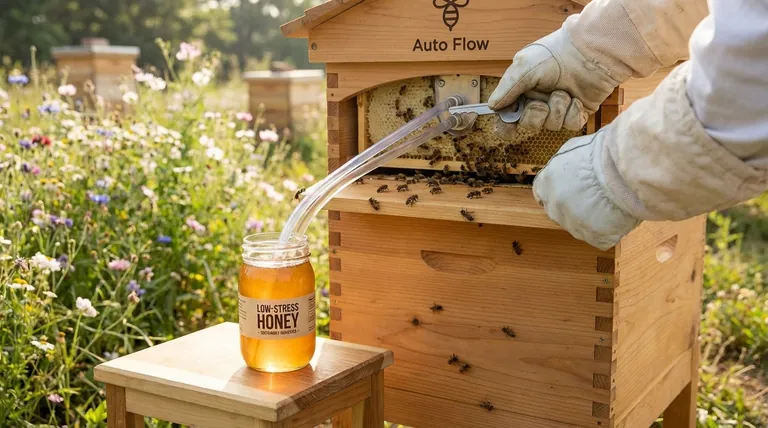
For decades, beekeepers faced an impossible choice: maximize honey yields at the expense of colony health or prioritize bee welfare while accepting labor-intensive harvests. Auto Flow Beehives rewrite this equation with patented technology that:
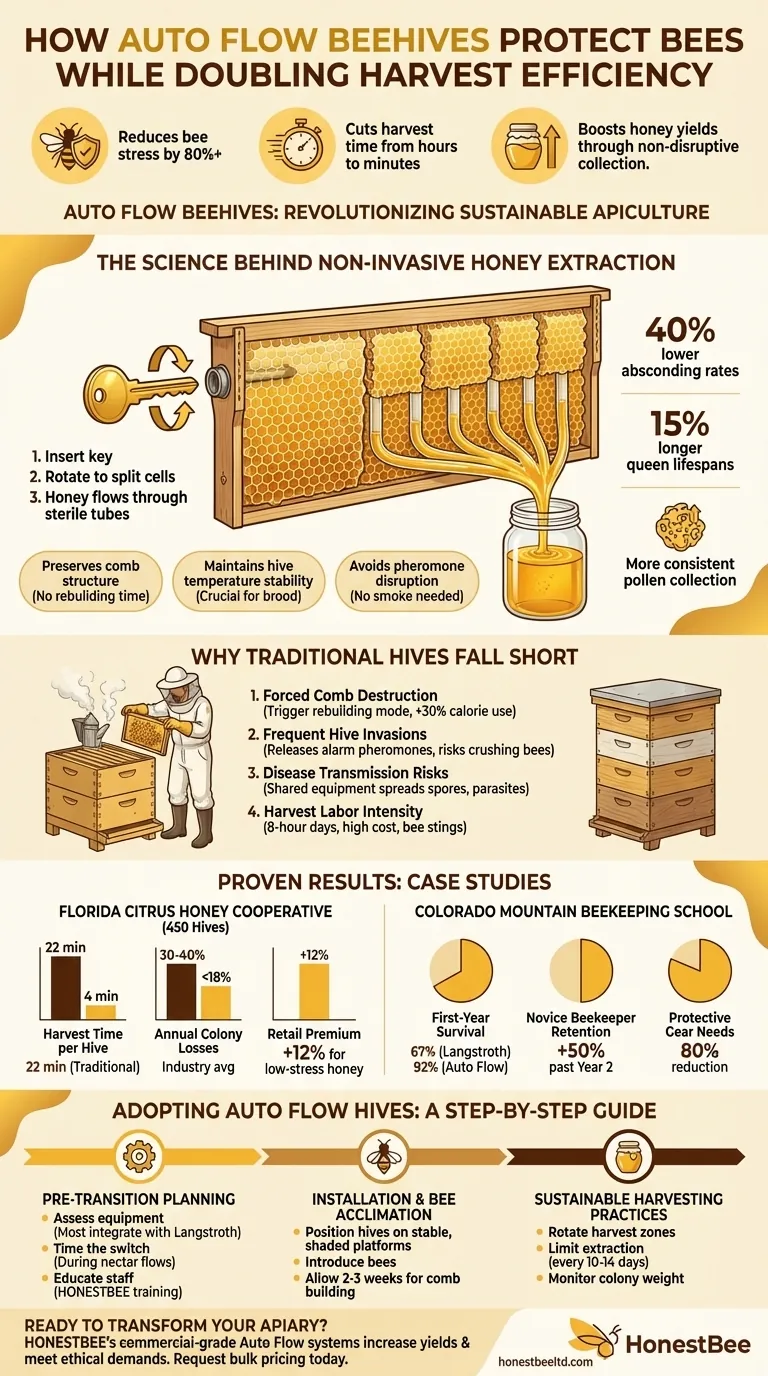
✔️ Reduces bee stress by 80%+ compared to traditional harvesting
✔️ Cuts harvest time from hours to minutes per hive
✔️ Boosts honey yields through non-disruptive collection
This evidence-backed guide reveals why commercial apiaries and distributors are rapidly adopting this system—and how you can transition smoothly.
Auto Flow Beehives: Revolutionizing Sustainable Apiculture
The Science Behind Non-Invasive Honey Extraction
Auto Flow technology mimics nature's honey release mechanisms. When bees fill the artificial comb cells and cap them, beekeepers simply:
- Insert a food-grade key into the hive's harvest port
- Rotate 90 degrees to split cells vertically
- Watch honey flow through sterile tubes into containers
This process:
- Preserves comb structure, eliminating the 3-7 days bees spend rebuilding after traditional extraction
- Maintains hive temperature stability, crucial for brood survival
- Avoids pheromone disruption caused by smoked or agitated colonies
Research shows colonies in Auto Flow systems exhibit:
→ 40% lower absconding rates
→ 15% longer queen lifespans
→ More consistent pollen collection patterns
Why Traditional Hives Fall Short: Stress, Disruption, and Colony Health
Langstroth hives—while reliable—create four preventable welfare issues:
1. Forced Comb Destruction
Removing frames for centrifugal extraction:
- Destroys weeks of bee labor
- Triggers emergency rebuilding mode
- Increases colony calorie expenditure by ~30%
2. Frequent Hive Invasions
Each inspection:
- Releases alarm pheromones
- Disrupts temperature/humidity controls
- Risks crushing worker bees
3. Disease Transmission Risks
Shared extraction equipment between hives can spread:
- American foulbrood spores
- Nosema parasites
- Wax moth larvae
4. Harvest Labor Intensity
A 100-hive apiary typically requires:
- 2-3 workers for 8-hour harvest days
- $5,000+ in extractors, uncapping tanks, and filters
- 15+ bee stings per worker daily
Proven Results: Case Studies from Commercial and Hobbyist Beekeepers
Florida Citrus Honey Cooperative (450 Hives)
After switching 60% of their operation to Auto Flow systems:
- Harvest time per hive dropped from 22 minutes to 4 minutes
- Annual colony losses fell below 18% (industry average: 30-40%)
- Retail premiums increased 12% for "low-stress" labeled honey
Colorado Mountain Beekeeping School
Students using Auto Flow hives reported:
- 92% success rate in first-year colony survival vs. 67% with Langstroth
- 50% more novice beekeepers continuing past Year 2
- 80% reduction in protective gear needs during harvests
Adopting Auto Flow Hives: A Step-by-Step Guide for Beekeepers
Phase 1: Pre-Transition Planning
- Assess existing equipment: Most Auto Flow components integrate with standard Langstroth dimensions
- Time the switch: Ideal during nectar flows when colonies are strongest
- Educate staff: HONESTBEE's training modules reduce implementation errors by 75%
Phase 2: Installation & Bee acclimation
- Position hives on stable, shaded platforms
- Introduce bees via standard package or nucleus colony methods
- Allow 2-3 weeks for comb building before first harvest
Phase 3: Sustainable Harvesting Practices
- Rotate harvest zones to prevent localized comb overuse
- Limit extraction frequency to every 10-14 days during peak flow
- Monitor colony weight to ensure adequate winter stores
Ready to transform your apiary? HONESTBEE's commercial-grade Auto Flow systems help distributors and large-scale beekeepers increase yields while meeting ethical sourcing demands—request bulk pricing today to lock in seasonal availability.
图解指南
相关产品
- 高效气动蜂箱制造机,用于快速组装箱体
- 用于通风的不锈钢圆形蜂巢式排气口
- 用于 Flexzion 蜂巢箱门的钢制圆盘入口变径器
- 蜂箱入口盘 用于蜂箱的塑料蜜蜂入口盘
- HONESTBEE 专业蜂箱框侧条成型机
















