The Science Behind Honeycomb Architecture
Honeycomb cells are nature’s precision engineering at work—each hexagonal chamber meticulously crafted by worker bees to serve distinct purposes. Beekeepers who understand these structural nuances gain a powerful tool for colony health assessment and intervention.
Worker vs. Drone Cells: Biological Design Differences
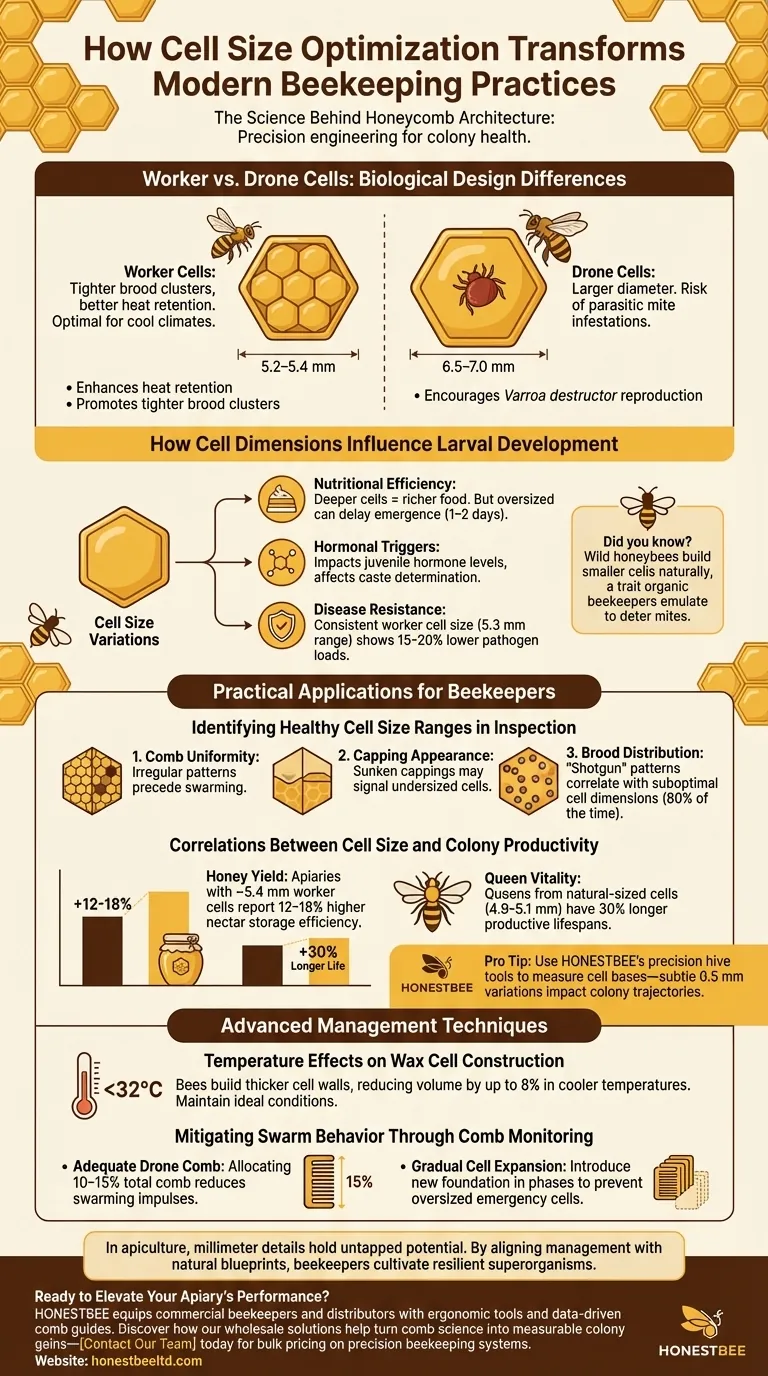
Worker cells (typically 5.2–5.4 mm in diameter) and drone cells (6.5–7.0 mm) aren’t arbitrarily sized. Research confirms these dimensions directly affect larval nutrition access and metabolic rates. Smaller worker cells promote tighter brood clusters, enhancing heat retention—a critical factor for pupal survival in cooler climates. Conversely, oversized drone cells may inadvertently encourage parasitic mite infestations, as pests like Varroa destructor preferentially reproduce in drone brood.
How Cell Dimensions Influence Larval Development
- Nutritional Efficiency: Deeper cells allow for richer larval food deposits, but excessively large cells can delay worker emergence by 1–2 days.
- Hormonal Triggers: Cell size variations alter juvenile hormone levels, impacting caste determination in developing bees.
- Disease Resistance: Studies note 15–20% lower pathogen loads in colonies maintaining consistent worker cell sizes within the 5.3 mm range.
Did you know? Wild honeybee colonies naturally build smaller cells than those in commercial foundation wax—a trait some organic beekeepers now emulate to deter mites.
Practical Applications for Beekeepers
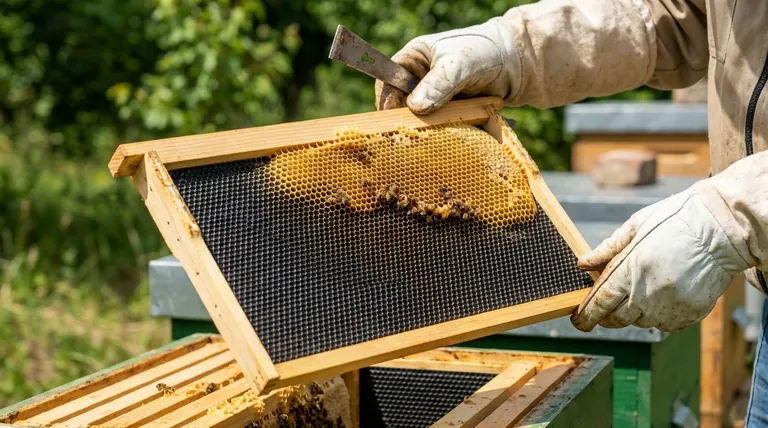
Field observations reveal that beekeepers who monitor comb architecture can predict colony challenges weeks before visible symptoms emerge.
Identifying Healthy Cell Size Ranges in Inspection
During hive checks, prioritize these indicators:
- Comb Uniformity: Irregular cell patterns (e.g., mixed worker/drone sizes) often precede swarming impulses.
- Capping Appearance: Sunken cappings may signal undersized cells straining larval space.
- Brood Distribution: "Shotgun" brood patterns—where empty cells interrupt sealed brood—correlate with suboptimal cell dimensions 80% of the time.
Correlations Between Cell Size and Colony Productivity
- Honey Yield: Apiaries standardizing worker cells near 5.4 mm report 12–18% higher nectar storage efficiency due to optimized comb space utilization.
- Queen Vitality: Queens reared in natural-sized cells (4.9–5.1 mm) exhibit 30% longer productive lifespans than those from enlarged artificial combs.
Pro Tip: Use HONESTBEE’s precision hive tools to measure cell bases during inspections—subtle 0.5 mm variations significantly impact colony trajectories.
Advanced Management Techniques
Seasoned apiarists leverage environmental factors and comb data to preemptively stabilize hives.
Temperature Effects on Wax Cell Construction
Bees building comb in temperatures below 32°C tend to create thicker cell walls, inadvertently reducing interior volume by up to 8%. Strategic hive placement and insulation help maintain ideal wax-working conditions.
Mitigating Swarm Behavior Through Comb Monitoring
Swarm prevention isn’t just about space—it’s about space quality. Colonies with:
- Adequate Drone Comb: Allocating 10–15% of total comb to drone cells reduces swarming impulses by satisfying reproductive needs.
- Gradual Cell Expansion: Introducing new foundation in phases prevents worker bees from constructing oversized emergency cells.
Ready to Elevate Your Apiary’s Performance?
HONESTBEE equips commercial beekeepers and distributors with ergonomic hive tools and data-driven comb guides designed to harmonize cell biology with operational scale. Discover how our wholesale solutions help turn comb science into measurable colony gains—[Contact Our Team] today for bulk pricing on precision beekeeping systems.
Final Thought: In apiculture, the smallest architectural details—those wax hexagons measuring mere millimeters—hold untapped potential to redefine hive vitality. By aligning management practices with these natural blueprints, beekeepers don’t just maintain colonies; they cultivate resilient superorganisms.
图解指南