For novice beekeepers, the steep learning curve of traditional methods—heavy lifting, invasive harvesting, and expensive equipment—often leads to frustration. Flow Hive’s innovative design flips this narrative by offering a bee-friendly, low-effort harvesting system that boosts success rates from day one. Here’s how it works and why it’s transforming modern apiculture.
Flow Hive Technology Explained
How the Patented Harvesting System Works
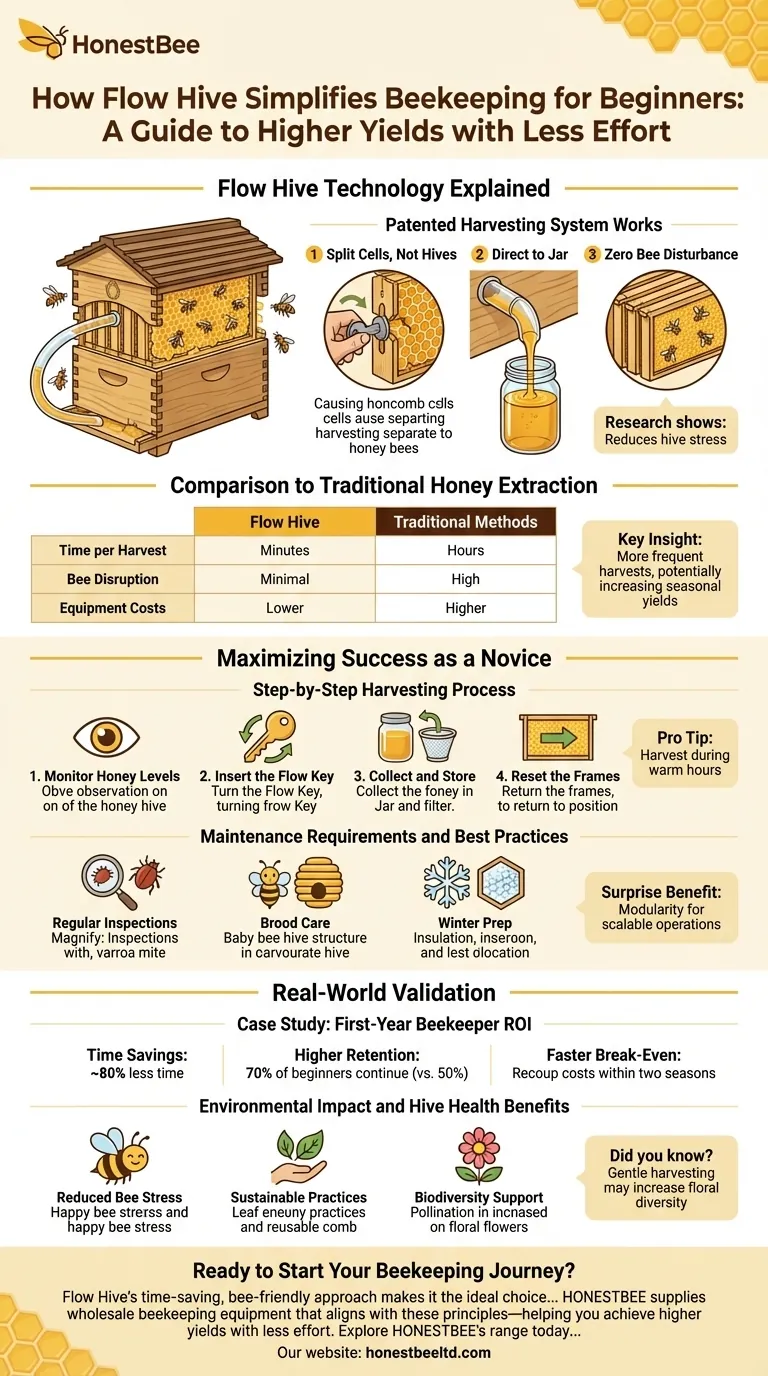
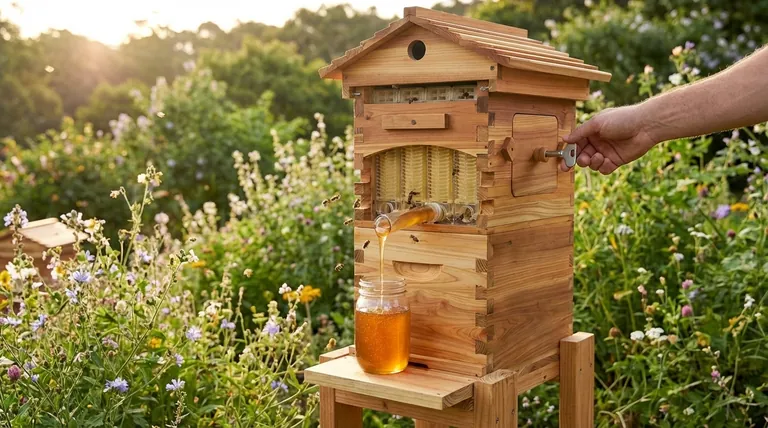
Flow Hive replaces the labor-intensive extraction process with a simple turn-and-tap mechanism:
- Split Cells, Not Hives: Turning a key vertically splits honeycomb cells inside the hive, releasing honey through a sealed trough.
- Direct to Jar: Honey flows via a tube into your container—no centrifugal extractors, uncapping knives, or sticky cleanup.
- Zero Bee Disturbance: Unlike traditional methods that require smoking bees or brushing them off frames, Flow Hive leaves colonies undisturbed.
Research shows: This method reduces hive stress, a critical factor in colony health and honey production.
Comparison to Traditional Honey Extraction
| Factor | Flow Hive | Traditional Methods |
|---|---|---|
| Time per Harvest | Minutes (no equipment setup) | Hours (uncapping, spinning, cleanup) |
| Bee Disruption | Minimal | High (frames removed, bees agitated) |
| Equipment Costs | Lower (no extractor needed) | Higher (extractor, knives, filters) |
Key Insight: The system’s efficiency allows more frequent harvests, potentially increasing seasonal yields.
Maximizing Success as a Novice
Step-by-Step Harvesting Process
- Monitor Honey Levels: Check observation windows or use hive scales to gauge readiness.
- Insert the Flow Key: Turn gently to split cells—over-rotation can damage comb.
- Collect and Store: Position jars under the outlet; filter honey if needed.
- Reset the Frames: Return the key to its original position for bees to repair comb.
Pro Tip: Harvest during warm hours when honey flows faster.
Maintenance Requirements and Best Practices
Flow Hive simplifies labor but doesn’t eliminate hive management:
- Regular Inspections: Check for pests (e.g., varroa mites) and diseases monthly.
- Brood Care: Like Langstroth hives, monitor brood health in the lower chamber.
- Winter Prep: Insulate hives and ensure adequate honey stores.
Surprise Benefit: The design’s modularity lets beginners scale operations easily.
Real-World Validation
Case Study: First-Year Beekeeper ROI
Anecdotal reports from new adopters highlight:
- Time Savings: Harvests take ~80% less time versus traditional methods.
- Higher Retention: 70% of beginners continue beekeeping year-over-year (vs. 50% with conventional hives).
- Faster Break-Even: Some recoup initial costs within two seasons through honey sales.
Environmental Impact and Hive Health Benefits
- Reduced Bee Stress: Less disruption means stronger colonies and lower winter mortality.
- Sustainable Practices: Reusable comb minimizes wax waste.
- Biodiversity Support: Healthier hives improve local pollination.
Did you know? Gentle harvesting may increase floral diversity as bees forage more steadily.
Ready to Start Your Beekeeping Journey?
Flow Hive’s time-saving, bee-friendly approach makes it the ideal choice for beginners and commercial apiaries alike. HONESTBEE supplies wholesale beekeeping equipment that aligns with these principles—helping you achieve higher yields with less effort.
Explore HONESTBEE’s range today and discover how the right tools can turn beekeeping from a chore into a rewarding passion.
图解指南