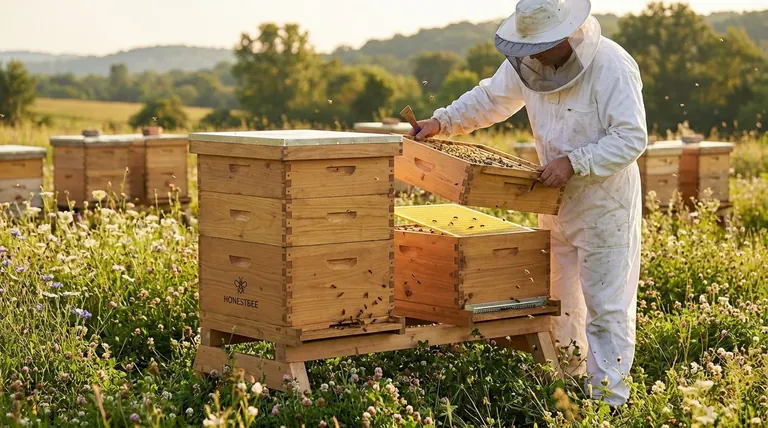
Successful beekeeping hinges on understanding how each part of a wooden beehive contributes to colony health and honey yield. This guide breaks down the functional synergy between hive components, offering actionable insights for commercial beekeepers and distributors.
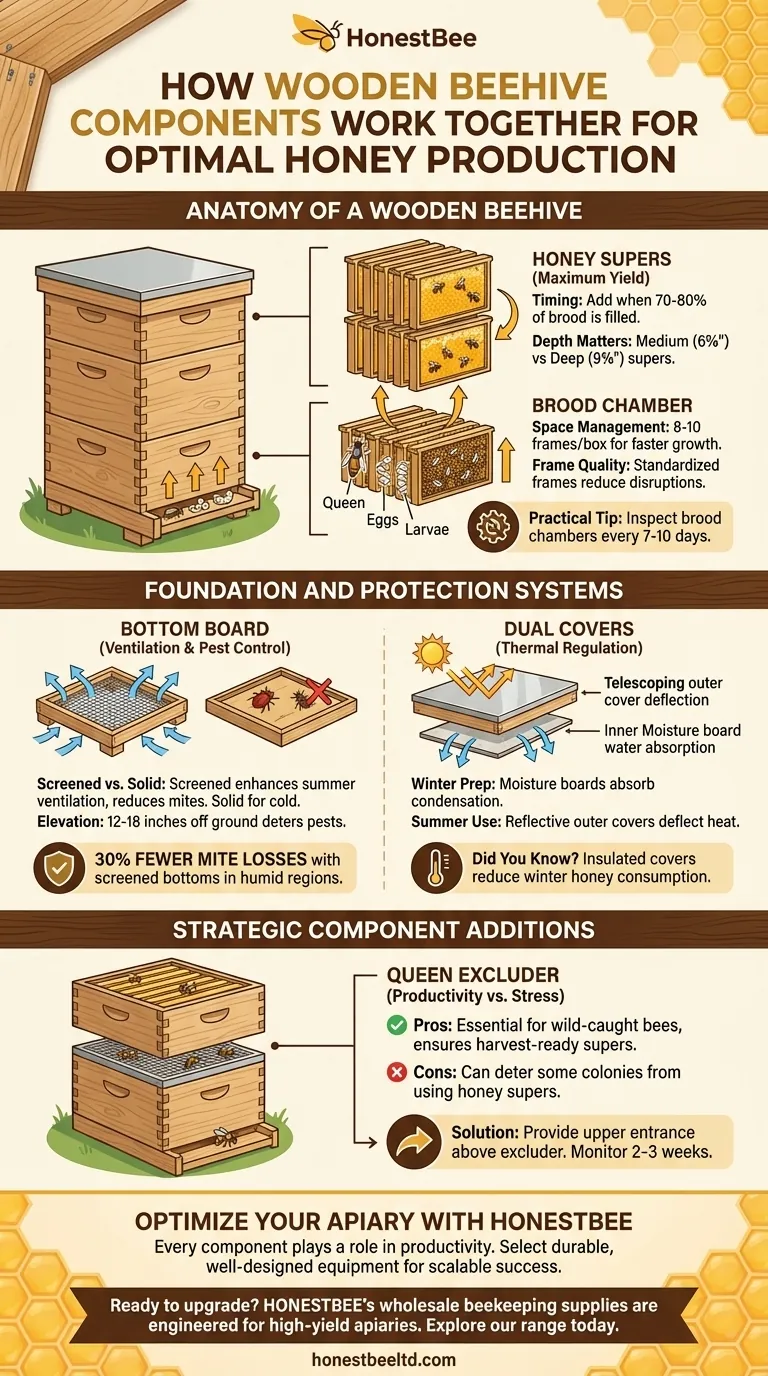
Anatomy of a Wooden Beehive
The Brood Chamber's Role in Colony Expansion
The brood chamber is the hive’s nursery, where the queen lays eggs and worker bees raise larvae. A well-maintained brood chamber directly impacts colony strength:
- Space Management: Colonies with adequate brood space (typically 8–10 frames per box) exhibit faster population growth. Overcrowding triggers swarming, reducing honey production.
- Frame Quality: Warped or damaged frames disrupt brood patterns. Commercial operations using standardized, durable frames report fewer colony disruptions.
Practical Tip: Inspect brood chambers every 7–10 days during peak season to monitor space needs and queen performance.
Honey Super Configuration for Maximum Yield
Honey supers are stacked above the brood chamber to store surplus honey. Key considerations:
- Timing: Add supers when 70–80% of brood chamber frames are filled. Delayed supering risks honeybound hives (bees filling brood cells with honey instead of raising young).
- Depth Matters: Medium-depth supers (e.g., 6⅝") are easier to handle during harvest, while deep supers (9⅝") suit high-yield environments.
Observation: Apiaries rotating supers seasonally—using lighter boxes in spring—report 15–20% higher yields due to reduced bee fatigue.
Foundation and Protection Systems
Bottom Board Design and Hive Ventilation
The bottom board regulates airflow and pest access:
- Screened vs. Solid: Screened boards enhance summer ventilation, reducing condensation and mite fall. Solid boards are preferable in colder climates.
- Elevation: Hives raised 12–18 inches off the ground deter ants and skunks.
Proven Practice: Beekeepers in humid regions using screened bottoms observe 30% fewer mite-related colony losses.
Thermal Regulation Through Dual Covers
A telescoping outer cover and inner moisture board stabilize hive temperature:
- Winter Prep: Moisture boards absorb condensation, preventing icy buildup that can kill clusters.
- Summer Use: Reflective outer covers deflect heat in sunny apiaries.
Did You Know? Colonies under insulated covers consume less stored honey in winter, preserving reserves for early spring buildup.
Strategic Component Additions
Queen Excluder: Productivity Booster or Colony Stressor?
Queen excluders prevent the queen from laying eggs in honey supers, but their effectiveness depends on bee genetics:
- Pros: Essential for wild-caught bees that overproduce brood, ensuring honey supers remain harvest-ready.
- Cons: Some colonies (especially those with local queens) may ignore honey supers entirely if blocked by an excluder.
Solution: Provide an upper entrance above the excluder to ease worker traffic. Monitor for 2–3 weeks; remove if honey storage stalls.
Optimize Your Apiary with HONESTBEE
Every component in a wooden beehive—from the brood chamber to the queen excluder—plays a role in colony productivity. For commercial beekeepers and distributors, selecting the right combination of durable, well-designed equipment is key to scalable success.
Ready to upgrade your operation? HONESTBEE’s wholesale-focused beekeeping supplies are engineered for high-yield apiaries. Explore our range today to build hives that work as hard as your bees.
图解指南
相关产品
- 用于养蜂和批发的木制蜂巢框
- HONESTBEE 接线和组装的木制蜂框为茁壮成长的蜂巢奠定了基础
- 组装好的木制蜂架,带塑料底座,经久耐用,使用方便 by HONESTBEE
- 用于养蜂的 Dadant 尺寸木制蜂箱
- 由 HONESTBEE 组装的带蜂蜡基础的木制蜂框,可随时使用