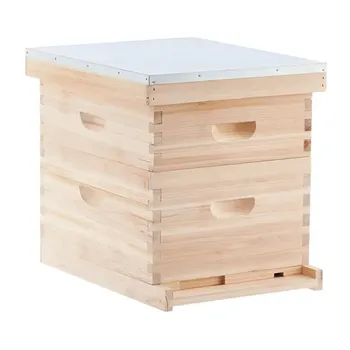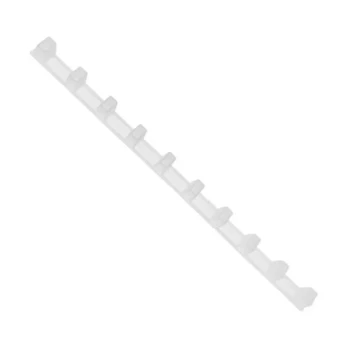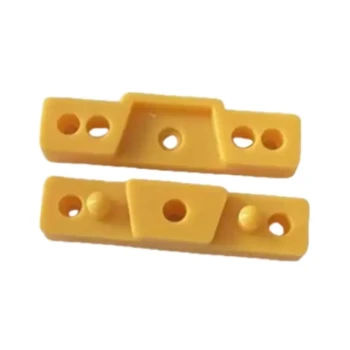
Beekeepers face constant trade-offs between colony health, honey yield, and operational efficiency. The right hive extensions—when chosen strategically—can transform these challenges into measurable improvements. This guide examines how queen excluders, entrance reducers, varroa trays, and spacers address specific pain points, helping you prioritize investments based on your apiary’s unique needs.
Enhancing Hive Efficiency with Optional Extensions
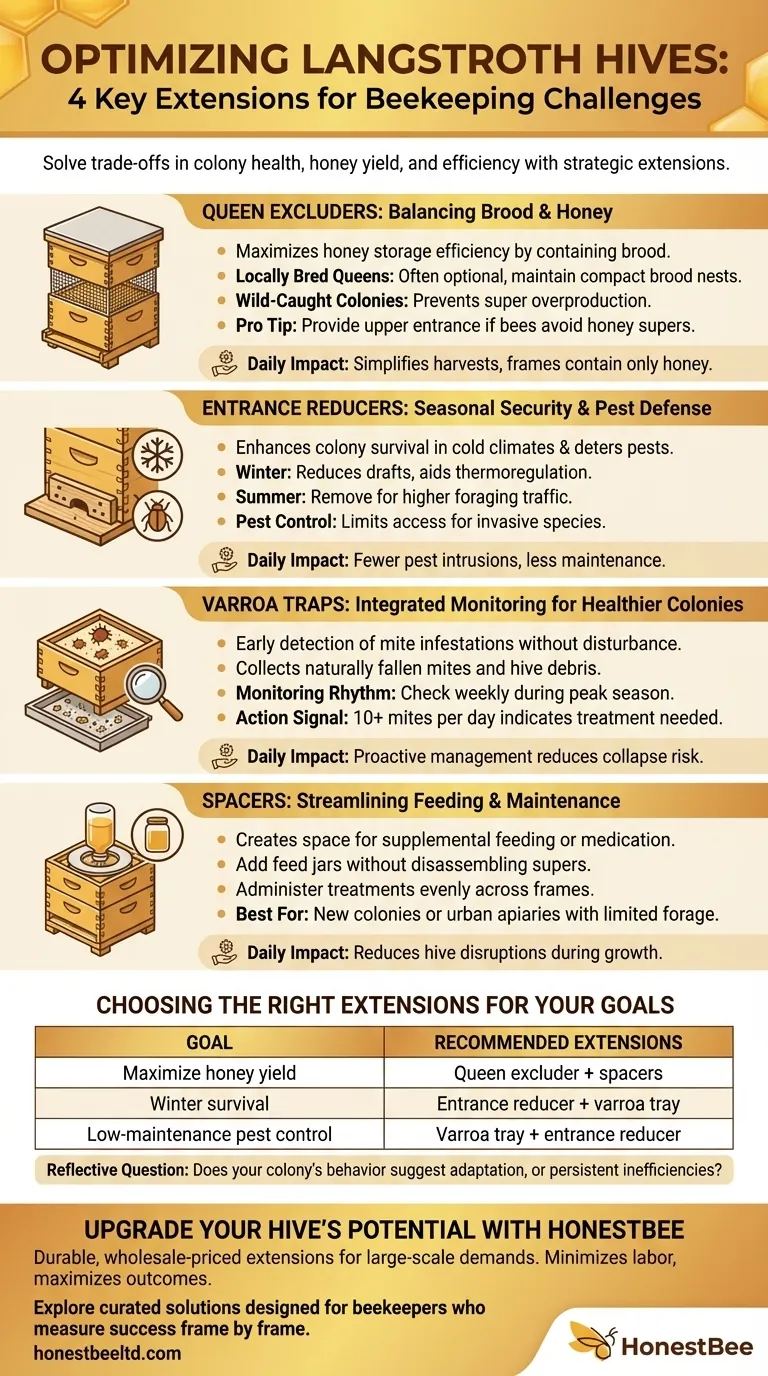
Queen Excluders: Balancing Brood Control and Honey Production
Primary Benefit: Maximizes honey storage efficiency while containing brood expansion.
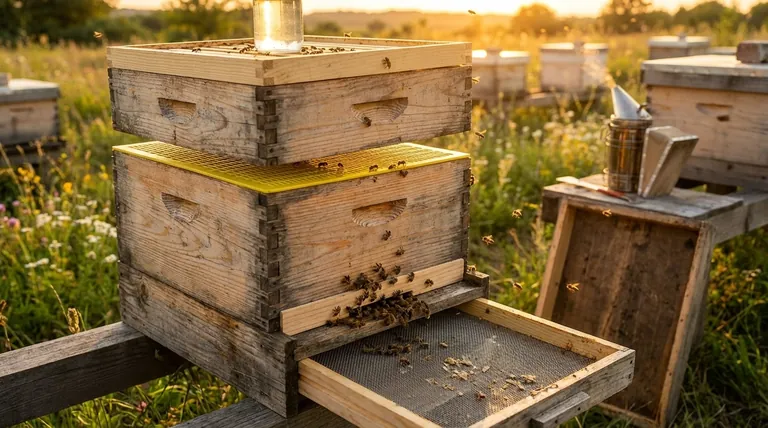
Queen excluders are mesh barriers placed between the brood box and honey supers. Research shows their impact varies by colony genetics:
- Locally bred queens often maintain compact brood nests, making excluders optional for honey production.
- Wild-caught colonies may overproduce brood; excluders prevent honey supers from being repurposed as brood chambers.
Pro Tip: Monitor bee behavior. If workers avoid honey supers after excluder installation, provide an upper entrance to reduce congestion.
Daily Impact: Simplifies harvests by ensuring frames contain only honey—no brood separation needed.
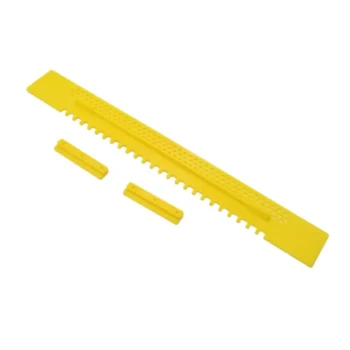
Entrance Reducers: Seasonal Security and Pest Defense
Primary Benefit: Enhances colony survival in cold climates and deters pests.
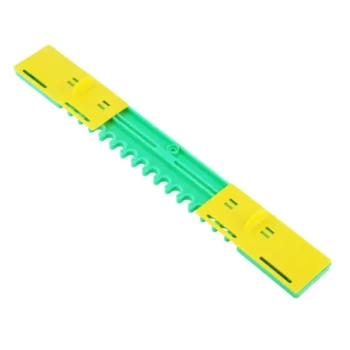
A narrowed hive entrance serves dual purposes:
- Thermoregulation: Reduces cold drafts in winter, helping bees maintain optimal hive temperatures.
- Pest Control: Limits access for invasive species like wasps or hive beetles.
Seasonal Use:
- Winter: Install to improve insulation.
- Summer: Remove to allow higher foraging traffic.
Daily Impact: Fewer pest intrusions mean less time spent on hive maintenance.
Varroa Traps: Integrated Monitoring for Healthier Colonies
Primary Benefit: Early detection of mite infestations without disturbing bees.
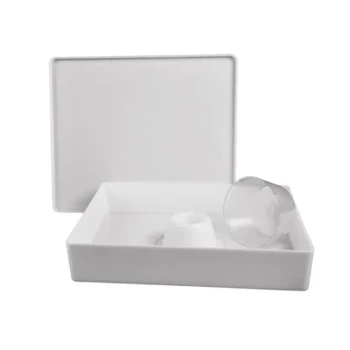
These removable trays sit below the brood box, collecting:
- Varroa mites that fall naturally.
- Debris indicating hive health (e.g., wax flakes, dead bees).
Monitoring Rhythm:
- Check weekly during peak season (spring/fall).
- Count mites to gauge infestation levels—10+ mites per day signals action is needed.
Daily Impact: Proactive mite management reduces colony collapse risks.
Spacers: Streamlining Feeding and Maintenance
Primary Benefit: Creates space for supplemental feeding or medication.
These modular inserts allow beekeepers to:
- Add feed jars without disassembling supers.
- Administer treatments (e.g., miticides) evenly across frames.
Best For:
- New colonies requiring frequent nutritional support.
- Urban apiaries with limited foraging options.
Daily Impact: Reduces hive disruptions during critical growth phases.
Choosing the Right Extensions for Your Apiary Goals
Prioritize based on your top challenges:
| Goal | Recommended Extensions |
|---|---|
| Maximize honey yield | Queen excluder + spacers |
| Winter survival | Entrance reducer + varroa tray |
| Low-maintenance pest control | Varroa tray + entrance reducer |
Reflective Question: Does your colony’s behavior suggest it’s adapting well to current equipment, or are there persistent inefficiencies?
Upgrade Your Hive’s Potential with HONESTBEE
Commercial apiaries and distributors trust HONESTBEE for durable, wholesale-priced extensions that align with large-scale beekeeping demands. Whether you’re safeguarding winter colonies or scaling honey production, our equipment minimizes labor while maximizing outcomes.
Ready to optimize? Explore our curated solutions designed for beekeepers who measure success frame by frame.
图解指南
相关产品
- 面向全球专业养蜂业的高性能朗氏蜂箱
- 适用于不同深度的 Langstroth 蜂箱
- 用于养蜂批发的澳大利亚 Langstroth 蜂箱
- 用于批发的长型兰斯特罗斯式水平顶杆蜂巢
- 实木底板 澳大利亚松木 Langstroth 底板供批发